


Website Performance Testing: Why Speed Matters for SEO, User Experience, and Conversions
Website speed is no longer a “nice to have.” It is a core business metric that directly affects search visibility, user trust, and revenue. When a page loads slowly, users leave before interacting, conversions decrease, and search engines interpret this behavior as a negative signal.
For this reason, using a reliable website performance testing tool is essential for every website owner, developer, and digital team.
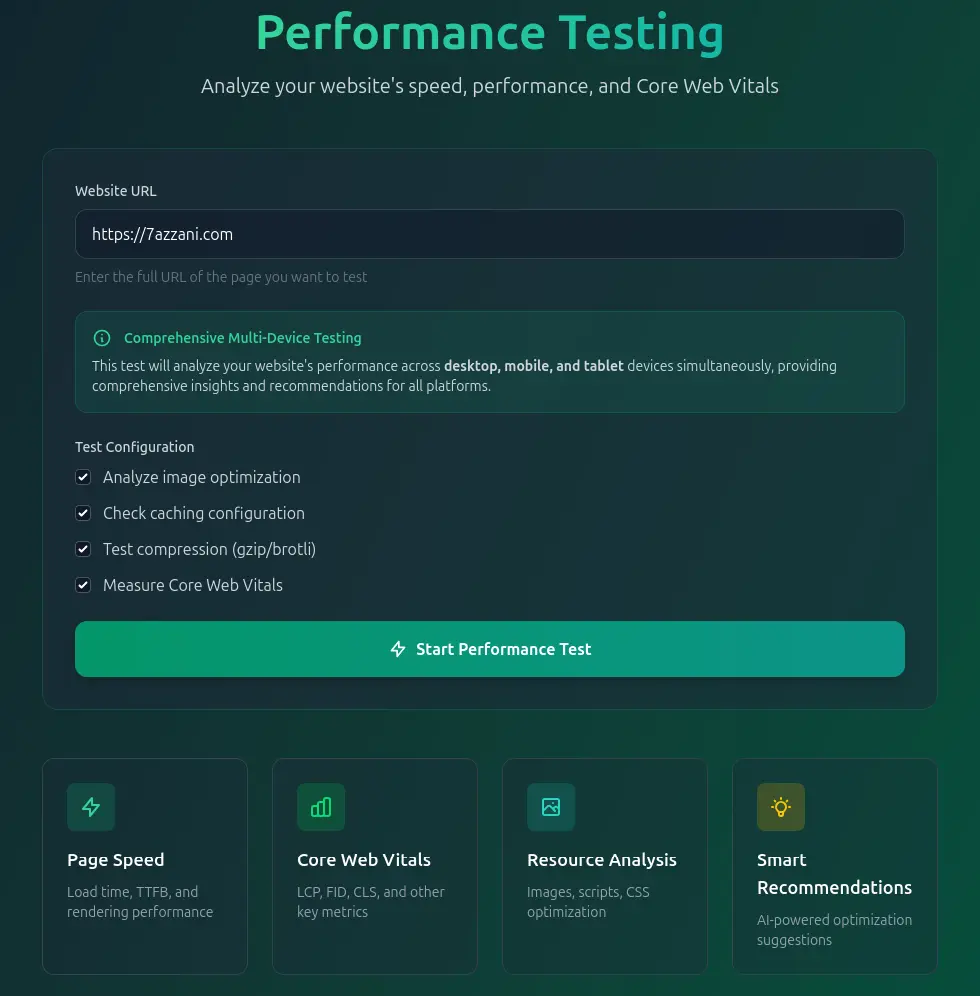
The 7AZZANI Performance Tool is designed to make performance analysis practical, actionable, and repeatable. It helps businesses understand how their websites behave in real-world conditions and what improvements will deliver the greatest impact.
What Is Website Performance Testing?
Website performance testing measures how quickly and efficiently a web page loads and responds to user interaction.
At its core, performance testing answers three critical questions:
-
How fast does your website load for real users?
-
What elements are slowing down the page?
-
Which improvements will deliver the highest return on investment (ROI)?
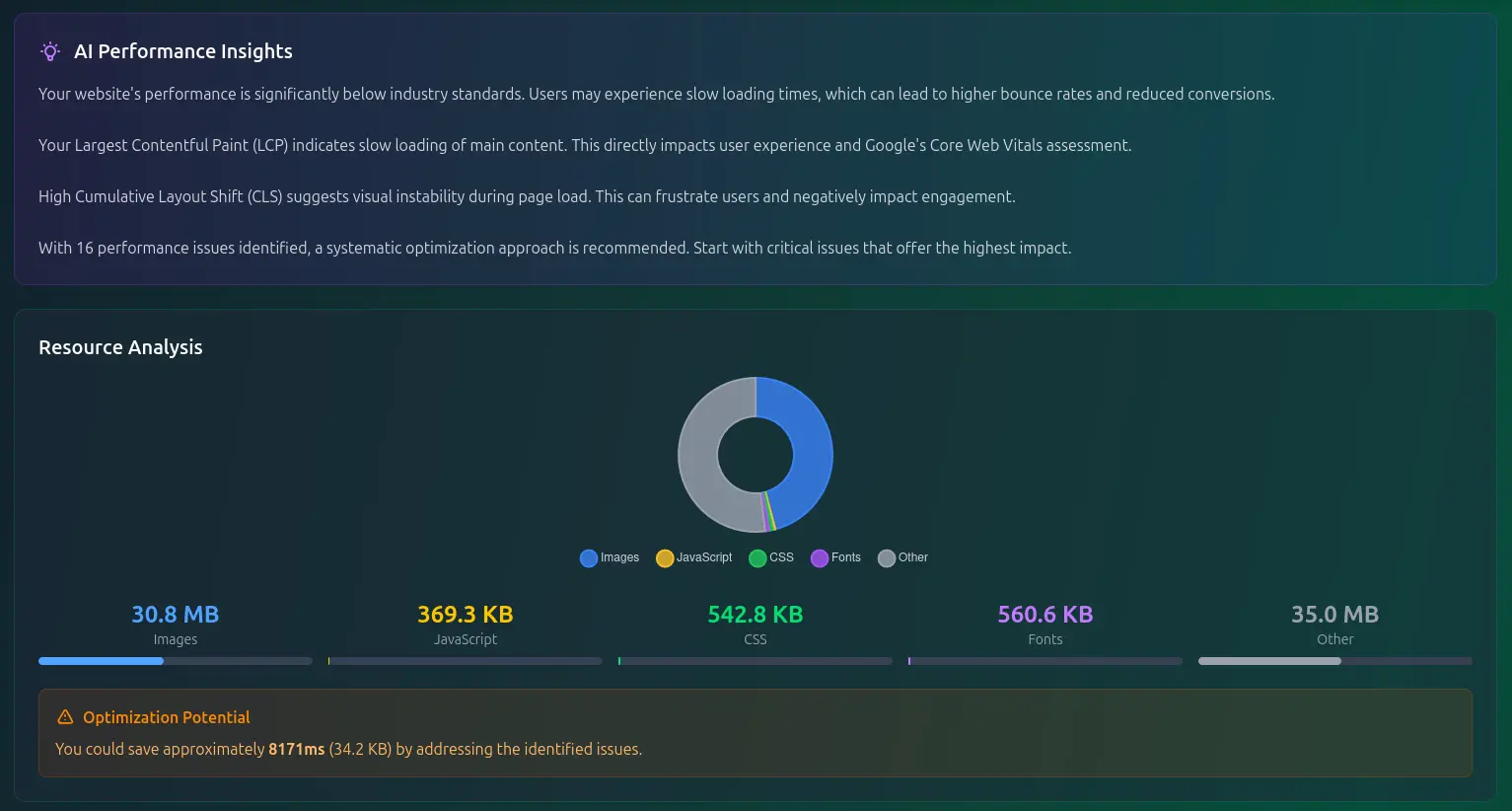
The 7AZZANI Performance Tool provides a structured approach to answering these questions. It collects key metrics, identifies performance bottlenecks, and transforms complex data into clear optimization steps.
Whether you operate a content platform, e-commerce store, or SaaS application, the same performance principles apply:
-
Pages should render quickly
-
User interactions must feel responsive
-
Visual elements should remain stable while loading
Key Website Performance Metrics That Matter
Website performance is not measured by a single number. Instead, it involves multiple milestones that reflect how users experience a page while it loads.
A fast website usually achieves the following sequence:
Fast HTML Delivery
The browser receives the HTML quickly and begins parsing immediately.
Quick Rendering of Critical Content
Critical CSS loads fast enough to prevent users from seeing a blank page.
Optimized Media Assets
Large images, fonts, and media files are optimized so they do not block rendering or overload network resources.
Efficient JavaScript Execution
JavaScript is minimized or deferred to prevent delays in user interaction.
Stable Visual Layout
The page remains visually stable and does not shift after it appears ready.
The 7AZZANI Performance Tool surfaces these elements clearly, helping you understand where performance problems occur and how to resolve them.
Why Website Speed Is Critical for SEO
Website performance plays a direct role in search engine optimization (SEO).
Search engines increasingly evaluate user experience signals when ranking pages. A fast website encourages stronger engagement metrics such as:
-
Lower bounce rates
-
Longer session durations
-
Higher conversion rates
In addition, performance affects search engine crawl efficiency. If your pages are slow or resource-heavy, search engine bots may crawl fewer pages or update your content less frequently.
For large websites or frequently updated content platforms, this can create a hidden SEO disadvantage.
Running regular performance tests ensures that your website maintains the speed standards necessary for search visibility and competitive rankings.
Common Website Performance Problems
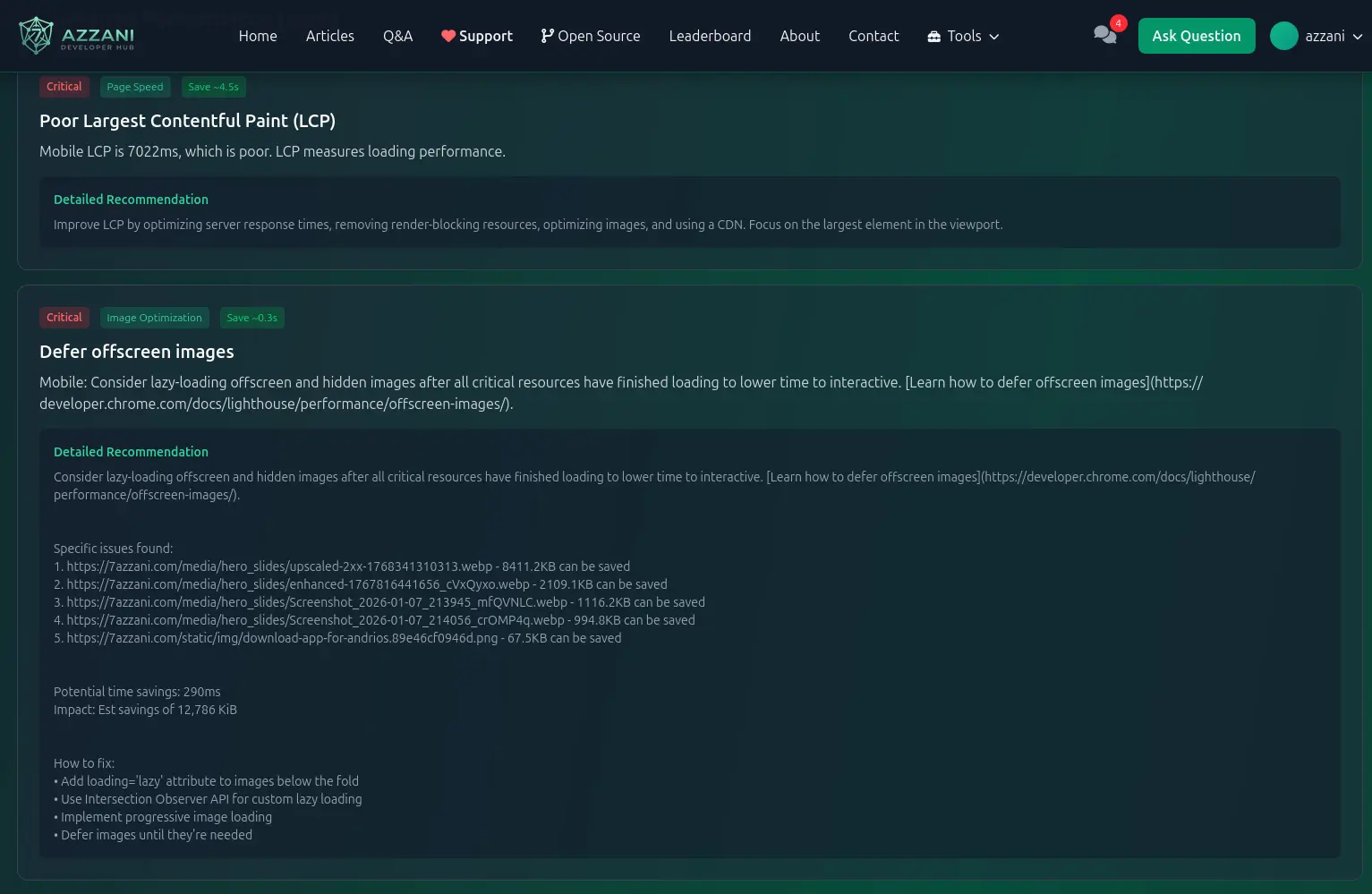
Many websites experience similar performance issues. The 7AZZANI Performance Tool helps identify the most common bottlenecks, including:
Unoptimized Images
Images that are significantly larger than their display size waste bandwidth and slow page loading.
Render-Blocking Resources
CSS and JavaScript files that block the browser from rendering the page quickly.
Too Many External Scripts
Third-party scripts competing for network bandwidth and delaying page rendering.
Excessive Font Files
Loading multiple fonts and styles that increase page weight.
Slow Server Response Time
Delayed responses from the server before any content is delivered.
Poor Caching Configuration
Lack of proper caching forces repeat visitors to download the same resources again.
The advantage of using a performance tool is not only identifying these issues but prioritizing the fixes that will deliver the greatest improvement.
How to Use the 7AZZANI Performance Tool Effectively
A successful performance strategy is based on consistent testing and improvement.
Professional teams often follow a simple workflow:
1. Test Before Major Updates
Run a performance test before deploying new features or design changes.
2. Test After Deployment
Run another test once updates are live.
3. Compare Performance Metrics
Analyze whether performance improved or declined.
4. Track Recurring Issues
Maintain a list of recurring bottlenecks and address them gradually.
The 7AZZANI Performance Tool simplifies this workflow and makes it easy to monitor performance over time.
Practical Website Speed Optimization Tips
Improving performance does not always require a complete website rebuild. Often, the most impactful improvements are relatively small.
Some of the most effective optimizations include:
Compress and Resize Images
Ensure images match the actual display size to reduce unnecessary data transfer.
Defer Non-Critical JavaScript
Load scripts only after the main content becomes visible.
Enable Server-Side Caching
Use caching headers and server caching to reduce repeat load times.
Minimize CSS Files
Combine or reduce CSS files to accelerate page rendering.
Use Modern Image Formats
Formats such as WebP and AVIF offer superior compression and faster loading.
Reduce Unused Fonts
Limit the number of fonts and styles loaded on each page.
Each optimization improves a different aspect of page loading, and the performance tool helps connect each improvement to measurable results.
Website Performance as a Business Strategy
Website speed is not only a technical consideration—it is a strategic business advantage.
A faster website creates measurable benefits:
-
Higher user trust
-
Improved engagement
-
Lower bounce rates
-
Increased conversions
-
Better search engine rankings
For e-commerce businesses, even small improvements in speed can significantly increase revenue by reducing checkout abandonment.
Why Choose the 7AZZANI Performance Tool?
The 7AZZANI Performance Tool is built to provide accurate insights without unnecessary complexity.
It is designed for continuous monitoring rather than one-time audits, helping businesses maintain high performance standards as their websites evolve.
Key benefits include:
-
Clear performance metrics
-
Actionable optimization insights
-
Repeatable testing workflows
-
Practical recommendations for improvement
If you are serious about SEO performance, user experience, and conversion optimization, website speed should be part of your ongoing strategy.
The 7AZZANI Performance Tool makes performance testing simple, measurable, and sustainable.
Discussion 0
No comments yet. Be the first to start the discussion!
Leave a Comment